What is a thermostatic shower valve?
The single most useful thing in a shower is the part you cannot see, cannot buy off a shelf, and cannot fit yourself.
By Sawyer V. · · How we research
The short answer
We earn a commission if you buy through the links on this page, at no extra cost to you. It does not change which products we pick or what we say about them — here is exactly how that works.
Quick picks
Tap any row for the full write-up. Prices are checked against Amazon rather than remembered — where we have no verified figure the button says so.
| # | Product | Best for | Renter | Price |
|---|---|---|---|---|
| 1 | No photo yet High Sierra Classic Fixed Showerhead with Trickle Valve (FCS-200) A trickle valve on the head — cut the flow without touching the mixer, so the temperature you set survives. | Keeping your temperature setting while you soap up | Safe | |
| 2 |  Delta In2ition Two-in-One Shower, 1.75 GPM Five spray settings plus a published pause, at 1.75 GPM — the pause is the temperature-preserving control. | The same trick, with settings | Safe |
What the valve does
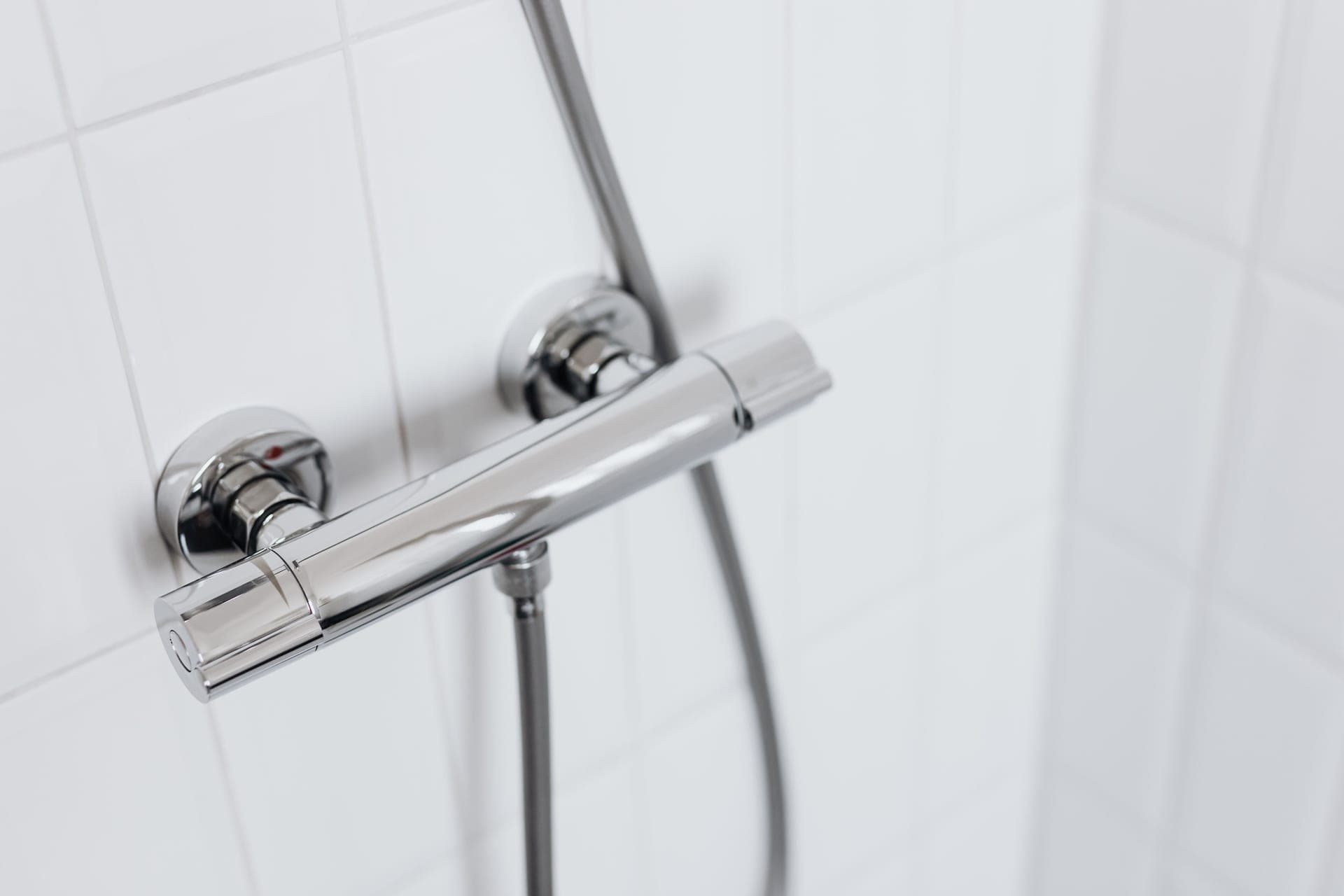
A shower mixes hot and cold. A plain mixer valve sets a ratio: turn the handle and you are choosing how much of each side opens. If the pressure on one side changes, the ratio changes with it, and so does the temperature.
A thermostatic valve sets a temperature. Inside is an element — usually a wax capsule or a bimetallic strip — that expands and contracts as the mixed water warms and cools, mechanically moving a piston that opens one side and closes the other.
When somebody flushes a toilet and cold pressure drops, the mixed water starts to warm, the element expands, and it throttles the hot side until the temperature is back where it was. No electronics, no power, and it responds in about a second.
Why it matters more than almost anything else
Temperature stability is the thing people notice most in a good shower and cannot name.
Scald protection. A sudden loss of cold pressure can deliver water at tank temperature. Thermostatic valves are why hotel showers do not do this.
No re-balancing. On a plain mixer, every disturbance means adjusting the handle and waiting for the change to travel down the pipe. That lag is why people overshoot.
Repeatability. Set a thermostatic valve once and it returns to the same temperature every time, rather than to the same handle position.
Why you cannot fit one
The valve is not the handle you see. It is a brass body inside the wall, connected to the hot and cold supplies, with the handle and trim plate as the visible end.
Replacing one means shutting off the water, opening the wall or working through the access panel, disconnecting and reconnecting both supplies, and making good afterwards. It is a plumber’s job in an owned home and it is not available at all in a rented one.
This is exactly the boundary this site draws. Anything behind the wall belongs to the property, not to you.
Pressure-balancing is not the same thing
Worth separating, because the two get conflated and only one is common in US housing.
Pressure-balancing valves keep the hot-cold ratio constant when pressure changes on one side. They stop the scald; they do not hold a temperature. If the hot water tank itself cools, a pressure-balancing valve follows it down.
Thermostatic valves hold the temperature regardless of what changes upstream.
Most US showers built in the last few decades have a pressure-balancing valve, which is why scalding is rarer than it used to be and why the shower still cools when somebody runs a bath.
What a renter can actually do
Use a pause or trickle valve. The everyday frustration is not usually the toilet flush — it is having to turn the mixer down to soap up and then hunt for the setting again. A head-mounted flow control removes that entirely, and both picks above publish one.
Learn your building’s pattern. If the shower cools every time the upstairs flat runs water, that is a shared supply and a maintenance conversation rather than a purchase.
Report a genuinely dangerous shower. If yours swings hot enough to be unsafe, that is a fault and a landlord’s repair, not something to work around. Framing it as a fault rather than a request is the whole trick.
Do not buy an inline thermostatic adapter. Products exist that claim to add thermostatic control between the arm and the head. None of the manufacturers we cover publishes one, we have no certified performance data for any of them, and a device controlling scald risk is the last place to accept an unpublished specification.
Every pick in full
2 we would buy. Each carries its Renter-Safe Install Rating, the published specs behind it, and the honest gap in what we know.
1. The renter's workaround
High Sierra Classic Fixed Showerhead with Trickle Valve (FCS-200)
High Sierra Showerheads · FCS-200-CH · best for keeping your temperature setting while you soap up
A trickle valve on the head — cut the flow without touching the mixer, so the temperature you set survives.
You cannot fit a thermostatic valve. You can stop touching the mixer, which removes most of the temperature frustration in a normal shower.
The High Sierra Classic with the trickle valve cuts flow to almost nothing at the head. The mixer stays exactly where you set it, so when you turn the flow back on the water is the temperature you left it at.
That solves the everyday problem — the fiddling and the re-balancing — without solving the supply-pressure problem, which is what a thermostatic valve is actually for.
Renter-Safe Install Rating
- Drilling
- None
- Tools
- One wrench
- Time to fit
- Not published
- Power
- None
- Reversible on move-out
- Fully
Why: Identical fitting to the FCS-100 — one threaded joint on the shower arm, no fixings in any surface.
Read from published documentation, not from fitting one. High Sierra Showerheads, Classic fixed showerhead range (FCS-200 with trickle valve). How the verdict is derived: renter-safe ratings explained.
What’s wrong with it
It does nothing about a toilet flushing. That is a pressure event, not a mixer setting.
What we can’t tell you
High Sierra publishes no flow figure for the trickle position.
Published specifications
| Variant | The FCS-100 with a trickle (shut-off) valve added |
|---|---|
| Flow rate options | Same published range as the FCS-100: 1.25 GPM through 2.5 GPM |
| Material | “Solid lead-free and corrosion resistant metal construction” |
| Thread | Universal 1/2″ - 14 NPS or NPT male thread |
| Trickle valve | Lever on the head that cuts the flow to a trickle without touching the mixer |
| Finishes published | Chrome, brushed nickel, oil rubbed bronze, polished brass, matte black |
Source: High Sierra Showerheads, Classic fixed showerhead range (FCS-200 with trickle valve)
#ad We have no verified live price for this one right now, so we are not showing a number. How we’re funded.
2. Best published pause
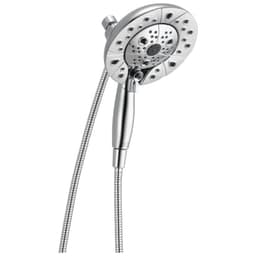
Delta In2ition Two-in-One Shower, 1.75 GPM
Delta · 58480-BL-PK · best for the same trick, with settings
Five spray settings plus a published pause, at 1.75 GPM — the pause is the temperature-preserving control.
The Delta In2ition publishes five settings plus pause, and the pause is the feature worth having here.
Same principle: flow stops at the head, the mixer keeps its setting, and the water comes back at the temperature you had. On a two-in-one it also means you can pause while moving the handheld about.
Neither this nor a trickle valve is a thermostatic device. They are a way of not disturbing a setting that works.
Renter-Safe Install Rating
- Drilling
- None
- Tools
- One wrench
- Time to fit
- Not published
- Power
- None
- Reversible on move-out
- Fully
Why: The whole assembly hangs off the existing shower arm on one threaded joint. Delta publishes no bracket that needs fixing to tile.
Read from published documentation, not from fitting one. Delta, H2Okinetic In2ition 5-Setting Two-in-One Shower 58480-BL-PK. How the verdict is derived: renter-safe ratings explained.
What it costs to run — Water
- Flow rate
- 1.75 GPM at 80 psi (Delta's published figure)
- Shower length
- 8 minutes
- Showers
- 365 a year
1.75 GPM x 8 min x 365 = 5,110 gallons a year, against 7,300 for a 2.5 GPM head
About 2,190 gallons a year less than a full-flow head
Arithmetic on published specifications, not a measurement. Rate source: Delta, In2ition 58480-BL-PK specifications (1.75 gpm @ 80 psi).
What’s wrong with it
More moving parts in a wet environment than a plain head has.
What we can’t tell you
Delta publishes no flow figure for the pause position.
Published specifications
| Flow rate | “1.75 gpm @ 80 psi, 6.6 L/min @ 552 kPa” |
|---|---|
| Spray settings | Five: “H2OKinetic spray, Full Body spray, Full Spray with Massage, Massaging spray” plus pause |
| Hose | “Includes 60 in. hose” |
| Overall height | “11-4/7″” |
| Technologies | H2Okinetic (“creates wave pattern for enhanced coverage”), In2ition two-in-one, MagnaTite docking |
| Certification | “WaterSense Labeled (uses 20% less water than industry standard)” |
Source: Delta, H2Okinetic In2ition 5-Setting Two-in-One Shower 58480-BL-PK
#ad Price $157.99 as of October 18, 2026. Prices change; Amazon’s listing is the one that counts. How we’re funded.
Where to buy
Everything recommended on this page, in one place. Each link is an Amazon Associates link — we earn a commission at no extra cost to you, and it never decides a pick.
- Check price on Amazon
High Sierra Classic Fixed Showerhead with Trickle Valve (FCS-200)
High Sierra Showerheads · FCS-200-CH · Renter verdict: Safe
- $157.99View on Amazon
Delta In2ition Two-in-One Shower, 1.75 GPM
Delta · 58480-BL-PK · Renter verdict: Safe
#ad Prices are not shown because we only publish figures we have verified on the day. How we’re funded.
Questions people actually ask
what does a thermostatic shower valve do
It holds the outlet temperature steady when supply pressure changes. A wax or bimetallic element inside expands and contracts with the mixed water and throttles the hot or cold side to compensate, in about a second, with no power.
can you add a thermostatic valve to an existing shower
Only by replacing the valve body inside the wall, which means shutting off the water, opening the wall or an access panel, and reconnecting both supplies. It is plumbing work and is not available in a rented property.
what is the difference between thermostatic and pressure balancing
Pressure balancing keeps the hot-cold ratio constant when pressure changes, so it stops scalding. Thermostatic holds an actual temperature, so it also compensates when the hot supply itself cools. Most US showers have the former.
how do i stop my shower going cold when the toilet flushes
That is a supply pressure event and only a valve inside the wall can compensate for it. If it is severe enough to be unsafe, report it as a fault. If the everyday annoyance is losing your setting while soaping, a pause or trickle valve on the head solves that part.
Sources
Read next
Back to Showers & Showerheads.