How to clean a shower head (and fix half of all “low pressure”)
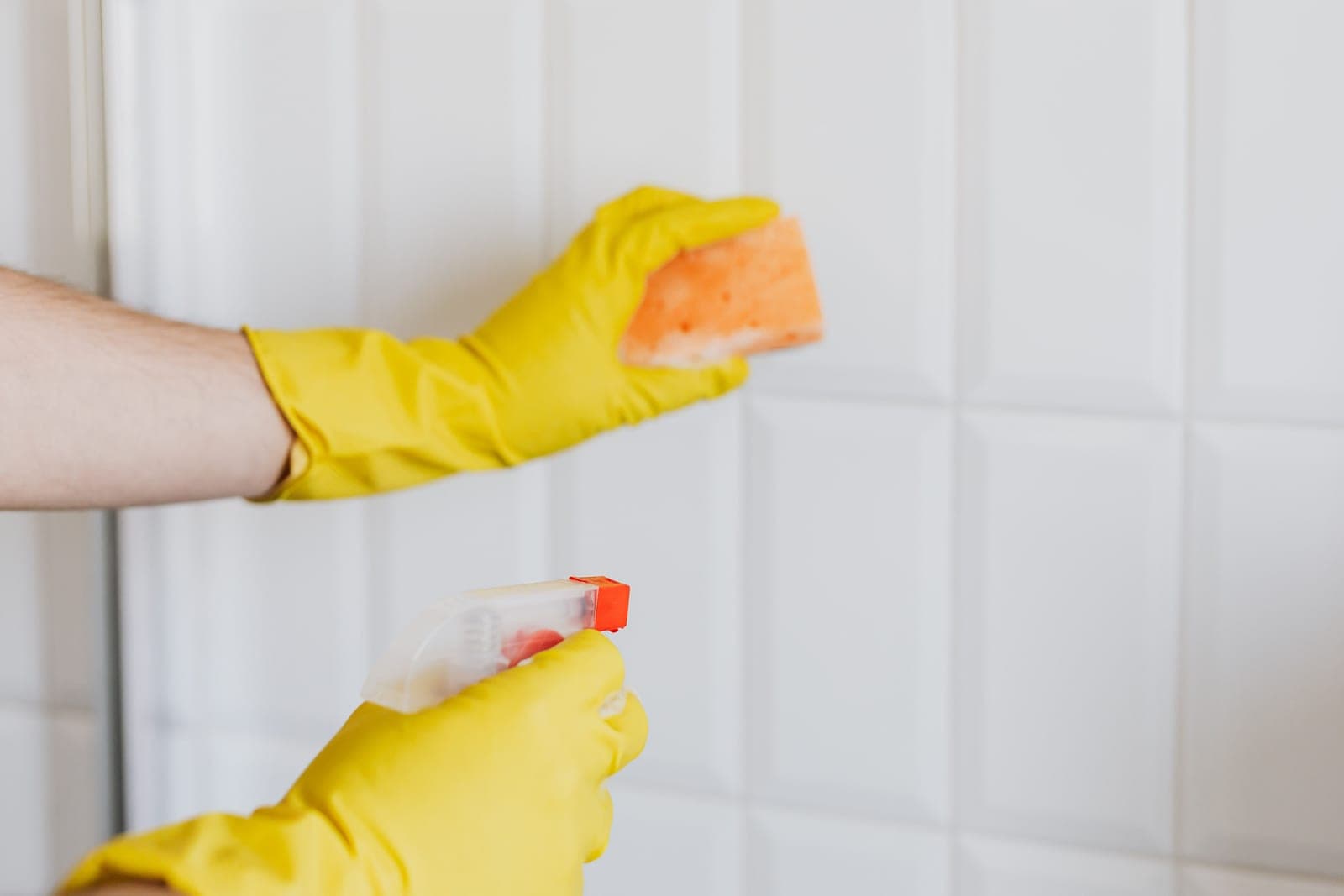
A blocked head throttles flow, and a throttled flow feels exactly like low pressure. This is the cheapest fix in the bathroom and most people never try it.
By Sawyer V. · · How we research
The short answer
We earn a commission if you buy through the links on this page, at no extra cost to you. It does not change which products we pick or what we say about them — here is exactly how that works.
Quick picks
Tap any row for the full write-up. Prices are checked against Amazon rather than remembered — where we have no verified figure the button says so.
| # | Product | Best for | Renter | Price |
|---|---|---|---|---|
| 1 |  Delta In2ition Two-in-One Shower, 2.5 GPM Touch-Clean nozzles are published as soft rubber holes you wipe calcium off with a thumb — descaling as a ten-second habit rather than an hour-long job. | Hard water and low patience | Safe | |
| 2 | No photo yet High Sierra Classic Fixed Showerhead (FCS-100) One nozzle instead of fifty, in solid metal, with a never-clog guarantee — the least surface area for scale to find. | Not doing this again | Safe |
Why this fixes what people think is low pressure
Flow through an opening depends on the area of the opening. Scale builds up on the inside edges of every nozzle, narrowing them, and it accumulates on the internal screen that catches debris. Neither is visible from outside, and the result — less water arriving with less force — is indistinguishable from genuinely low supply pressure.
This is the reason we tell people to descale before buying anything on the low-pressure page. It costs a dollar, it takes an hour of waiting and five minutes of work, and a meaningful share of the time it is the entire fix.
Why vinegar, and what not to use instead
Limescale is calcium carbonate. Acetic acid — vinegar — dissolves it. That is the whole chemistry, and it is why the cheapest thing in the cupboard outperforms most bathroom sprays here: a general-purpose cleaner is formulated for soap scum and grease, neither of which is what is blocking your nozzles.
Do not reach for something stronger. Descalers sold for kettles are more aggressive acids and will attack plated finishes; bleach does nothing to limescale at all and should never be mixed with anything acidic. Plain white vinegar, undiluted, is the right tool.
The finish warning, in detail
Chrome and stainless steel are effectively immune to an overnight vinegar soak. Everything else is not.
Living finishes and coatings — brass, gold, matte black, oil-rubbed bronze, brushed nickel with a lacquer — can dull, spot or strip with extended acid contact. High Sierrapublishes its Classic in chrome, brushed nickel, oil rubbed bronze, polished brass and matte black, and the last three are exactly the ones to be careful with.
The safe rule: if it is not chrome or bare stainless, one hour maximum, then rinse thoroughly with clean water. You will still shift most of the scale, and you will not have traded a blocked head for a blotched one.
How often
It depends entirely on your water, and the honest answer is that your shower will tell you. Descale when the spray pattern starts to wander — individual nozzles firing sideways is the first symptom, before the overall force drops.
As a starting point: hard water, every three months; moderate, twice a year; soft, when you notice something. If you find yourself doing it more often than quarterly, the underlying problem is water hardness rather than the head, and the hard-water page is where to go next.
When cleaning is not the answer
Two symptoms mean the head is beyond descaling. If nozzles are physically deformed or missing — common on cheap rubber faces after a few years — no amount of vinegar brings them back. And if the head leaks from the body rather than the joint, an internal seal has failed and it is not a serviceable part on most consumer heads.
At that point you are buying a new one, and the picks are here. The good news is that it is a fifteen-minute job with one wrench.
Every pick in full
2 we would buy. Each carries its Renter-Safe Install Rating, the published specs behind it, and the honest gap in what we know.
1. Easiest to keep clean
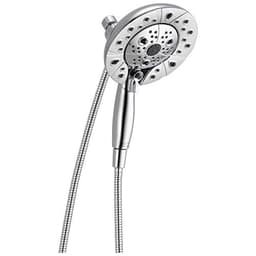
Delta In2ition Two-in-One Shower, 2.5 GPM
Delta · 58480-25-PK · best for hard water and low patience
Touch-Clean nozzles are published as soft rubber holes you wipe calcium off with a thumb — descaling as a ten-second habit rather than an hour-long job.
Delta publishes Touch-Clean as “soft rubber spray holes allow you to easily wipe away calcium and lime build-up”, and it is the most genuinely useful anti-scale feature in the category, because it converts a scheduled chore into something you do absent-mindedly while the conditioner is in.
If your water is hard, this is worth more than any published flow rate. A head that stays clean keeps the flow it was sold with; a head that scales up loses it over two years and gets blamed for low pressure.
Renter-Safe Install Rating
- Drilling
- None
- Tools
- One wrench
- Time to fit
- Not published
- Power
- None
- Reversible on move-out
- Fully
Why: One threaded joint on the shower arm, and the hand shower docks magnetically to the head rather than to a bracket screwed into the wall.
Read from published documentation, not from fitting one. Delta, H2Okinetic In2ition 5-Setting Two-in-One Shower 58480-25-PK. How the verdict is derived: renter-safe ratings explained.
What it costs to run — Water
- Flow rate
- 2.5 GPM at 80 psi (Delta's published figure)
- Shower length
- 8 minutes
- Showers
- 365 a year
2.5 GPM x 8 min x 365 = 7,300 gallons a year
About 7,300 gallons a year — the full-flow baseline every other head here is measured against
Arithmetic on published specifications, not a measurement. Rate source: Delta, In2ition 58480-25-PK specifications (2.5 gpm @ 80 psi).
What’s wrong with it
Rubber nozzles are the part that perishes first on any head. Nothing lasts forever, and soft nozzles are softer for a reason.
What we can’t tell you
Delta does not publish a nozzle service life, so we cannot tell you how many years of thumb-rubbing they take.
Published specifications
| Flow rate | “2.5 gpm @ 80 psi, 9.5 L/min @ 552 kPa” |
|---|---|
| Spray settings | Five: H2Okinetic PowerDrench, Full Body, Full Spray with Massage, Massaging spray, Pause |
| Hose | “Includes 60 in. - 82 in. (1524 mm - 2083 mm) stretchable metal hose” |
| Overall height | “Overall Height (in.): 11-4/7” |
| Touch-Clean | “Soft rubber spray holes allow you to easily wipe away calcium and lime build-up” |
| MagnaTite docking | “Powerful integrated magnet to pull your faucet spray wand or In2ition hand shower precisely into place” |
Source: Delta, H2Okinetic In2ition 5-Setting Two-in-One Shower 58480-25-PK
#ad Price $204.24 as of October 19, 2026 $214.99 (5% off). Prices change; Amazon’s listing is the one that counts. How we’re funded.
2. Least to clean in the first place
High Sierra Classic Fixed Showerhead (FCS-100)
High Sierra Showerheads · FCS-100-CH · best for not doing this again
One nozzle instead of fifty, in solid metal, with a never-clog guarantee — the least surface area for scale to find.
The other way to solve a cleaning problem is to have less to clean. High Sierra’s single-nozzle design has a fraction of the openings of a conventional head, and the company backs it with a never-clog guarantee — with the honest published caveat that it is “void if the mesh screen is removed”.
That screen is the working part of the promise. It catches particles before they reach the nozzle, and people remove it because they have read somewhere that it restricts flow. Leave it in.
Renter-Safe Install Rating
- Drilling
- None
- Tools
- One wrench
- Time to fit
- Not published
- Power
- None
- Reversible on move-out
- Fully
Why: It threads onto the existing 1/2″ shower arm and nothing else is touched. Keep the old head in a drawer, screw it back on the day you move, and the bathroom is exactly as you found it.
Read from published documentation, not from fitting one. High Sierra Showerheads, Classic Fixed Showerhead FCS-100-CH. How the verdict is derived: renter-safe ratings explained.
What it costs to run — Water
- Flow rate
- 1.25 GPM (the lowest published option)
- Shower length
- 8 minutes
- Showers
- 365 a year
1.25 GPM x 8 min x 365 = 3,650 gallons a year, against 7,300 for a 2.5 GPM head
About 3,650 gallons a year saved against a full-flow head
Arithmetic on published specifications, not a measurement. Rate source: High Sierra Showerheads, Classic Fixed Showerhead product page (published flow-rate options).
What’s wrong with it
The mesh screen itself still needs occasional rinsing, and it is a small fiddly component to get in and out.
What we can’t tell you
High Sierra does not publish a cleaning interval or a recommended descaling method for the screen.
Published specifications
| Flow rate options | 1.25 GPM (“Saves up to 50% water and the energy to heat it”) through 2.5 GPM (“Maximum flow rate per shower head allowed nationally by the Federal Government”) |
|---|---|
| Nozzle design | A single nozzle that works “just like nature does, by colliding water to create a rain-like cascade of large, heavy, high-energy droplets” |
| Material | “Solid lead-free and corrosion resistant metal construction” |
| Thread | “Connects to shower arms, extensions, filters, etc with universal 1/2″ - 14 NPS or NPT male threads size” |
| Certification | “Independently tested and certified to WaterSense and WaterMark” |
| Guarantee | “The NEVER-CLOG GUARANTEE is void if the mesh screen is removed” |
| Made in | “Engineered and built in the USA” |
| Tools supplied | A wrench is supplied with the showerhead |
Source: High Sierra Showerheads, Classic Fixed Showerhead FCS-100-CH
#ad We have no verified live price for this one right now, so we are not showing a number. How we’re funded.
Where to buy
Everything recommended on this page, in one place. Each link is an Amazon Associates link — we earn a commission at no extra cost to you, and it never decides a pick.
- $204.24View on Amazon
Delta In2ition Two-in-One Shower, 2.5 GPM
Delta · 58480-25-PK · Renter verdict: Safe
- Check price on Amazon
High Sierra Classic Fixed Showerhead (FCS-100)
High Sierra Showerheads · FCS-100-CH · Renter verdict: Safe
#ad Prices are not shown because we only publish figures we have verified on the day. How we’re funded.
Questions people actually ask
shower head how to clean
Tie a bag of undiluted white vinegar around the head so the nozzles are submerged, leave it an hour — or overnight only if the finish is chrome or stainless — then scrub the face with an old toothbrush, rub any rubber nozzles with a thumb, and run the shower hot for a minute.
shower head how to open
On most consumer heads you should not need to. The nozzle face and the internal screen are the parts that block, and both are reachable without dismantling anything. Heads that do come apart usually unscrew at the collar by hand, and forcing one that does not is how they crack.
shower hose how to clean
Detach the hose at both ends, coil it in a bowl of white vinegar for an hour, then flush it through with hot water. Metal hoses tolerate this well; the fittings at each end are usually chrome-plated, so rinse them properly afterwards.
Sources
Read next
Back to Showers & Showerheads.