Towel warmer bucket vs rack: which format?
These are not two versions of the same product. One is an event, the other is a condition, and picking the wrong one is the main way people end up disappointed.
By Sawyer V. · · How we research
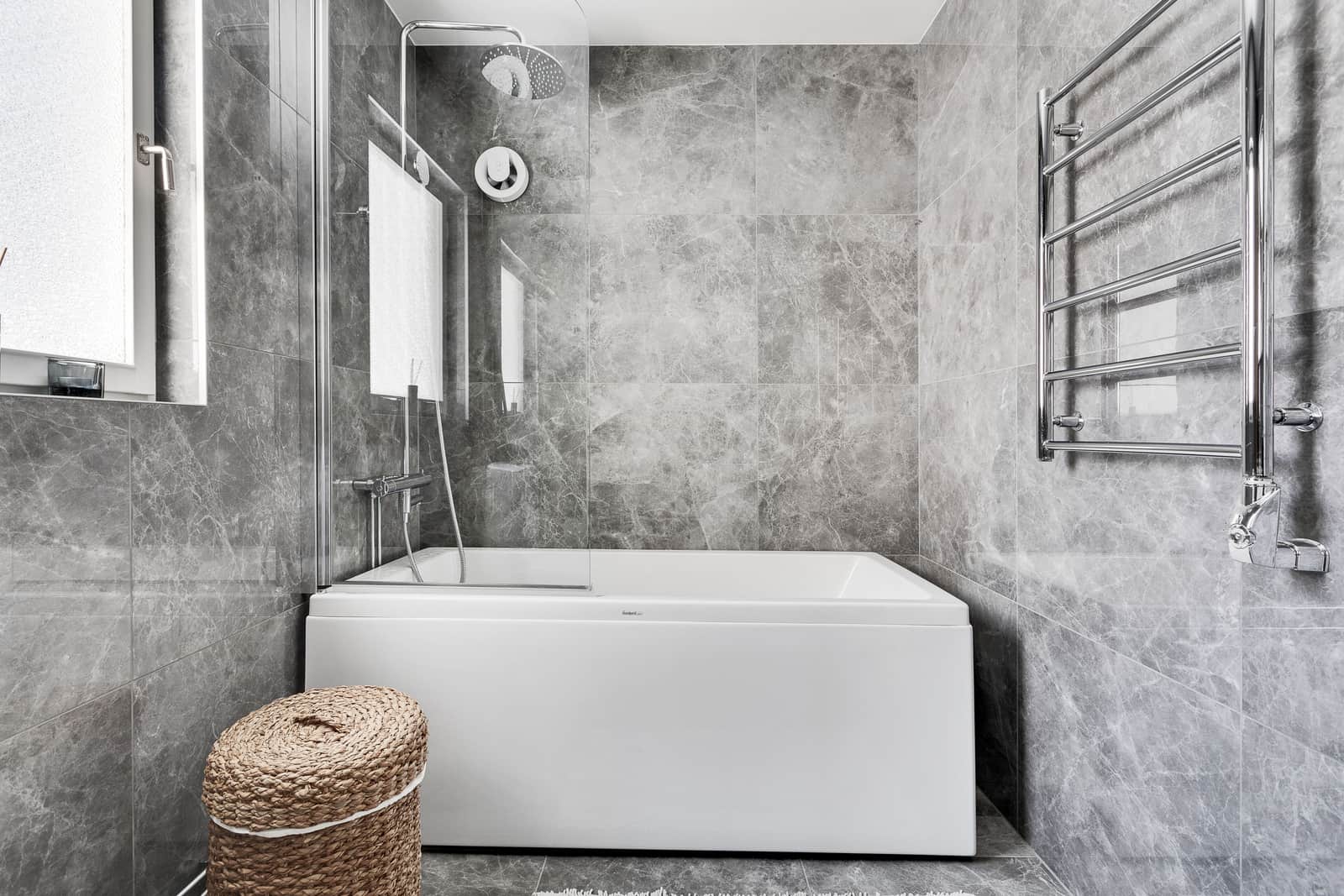
The short answer
We earn a commission if you buy through the links on this page, at no extra cost to you. It does not change which products we pick or what we say about them — here is exactly how that works.
Quick picks
Tap any row for the full write-up. Prices are checked against Amazon rather than remembered — where we have no verified figure the button says so.
| # | Product | Best for | Renter | Price |
|---|---|---|---|---|
| 1 |  Zadro 20-Liter Towel Warmer Bucket 480 W into 20 liters for half an hour: the only format that makes a towel hot rather than warm. | A properly hot towel at a chosen moment | Safe | |
| 2 |  WarmlyYours Ibiza Freestanding Towel Warmer 90 W spread across six bars all day: never hot, always dry, and it doubles as where the towels live. | Towels that are dry when you reach for them | Safe |
The comparison in one table
| Bucket | Rack (freestanding) | |
|---|---|---|
| Published wattage | 480 W (Zadro) | 90 W (WarmlyYours Ibiza) |
| Typical run | 15–60 minute timed cycle | Hours, or continuously |
| Cost per use | About 4 cents per 30-minute cycle | About 3 cents a day on a 2-hour timer |
| Towels held | One or two, rolled | Several, draped |
| Result | Hot | Warm and dry |
| Doubles as storage | No | Yes — it is also the towel rail |
| Renter verdict | Safe | Safe if freestanding, Owner-only if wall-mounted |
Why the wattages look backwards
A bucket draws five times as much power as a rail and costs about the same to run, which confuses people until you look at the run time.
The bucket is 480 W for half an hour: 0.24 kWh. The rail is 90 W for two hours: 0.18 kWh. Similar energy, delivered completely differently — the bucket in a burst, the rail as a trickle. And that is the whole comparison in physical terms: a burst makes something hot, a trickle keeps things dry.
The one number worth watching is a rail left on permanently. 90 W for 24 hours is 2.16 kWh, or about 40 cents a day. Still not much, but twelve times the timer version, which is why a plug-in timer is the best accessory in this category.
Which problem do you actually have?
“I want the hotel thing.” That is the bucket. The hotel sensation is a hot towel at a specific moment, and a low-wattage rail does not produce it.
“My towels are never dry.” That is the rail, and it is the more common complaint. A bathroom with poor ventilation leaves towels damp, damp towels smell, and a 90 W rail running a few hours a day fixes both.
“My bathroom is cold.” Neither. 90 W will not warm a tiled room and a bucket only warms its own contents. You want a heater, and probably one with a bathroom safety rating.
“There is nowhere to hang towels.” The rail, decisively. A freestanding rail is a towel rail that happens to be heated, which means it solves a storage problem and a comfort problem with one object — genuinely useful in a rented bathroom where you cannot drill a rail into the wall.
Space, honestly
Both take floor space and the published dimensions are worth picturing.
Zadro publishes its bucket at 21.25 inches tall and 12 across — roughly a kitchen bin. WarmlyYours publishes the Ibiza at 34.84 inches tall, 21.85 wide and 13.97 deep — roughly a small side table, and considerably more presence.
In a small bathroom this is often the deciding factor rather than anything technical. A bucket can live in a corner or a cupboard between uses. A rail is furniture.
Maintenance
A rail needs nothing. It is stainless steel bars with a heating element inside; you wipe it occasionally.
A bucket needs a small habit: take the towel out when the cycle finishes and leave the lid off. A damp towel in a warm sealed tub is ideal conditions for mildew, which is the recurring complaint about the format. VEVOR publishes bottom drainage on its bucket for exactly this reason.
Can you have both?
Yes, and it is not as silly as it sounds: a freestanding rail as the everyday towel home, and a bucket for the once-in-a-while hot towel. Combined running cost at the published wattages is around seven cents on a day you use both.
But if you are buying one thing, buy for the complaint you actually have. The rail is the better default because it solves storage as well as warmth; the bucket is the better answer if the hot towel is genuinely the point.
Every pick in full
2 we would buy. Each carries its Renter-Safe Install Rating, the published specs behind it, and the honest gap in what we know.
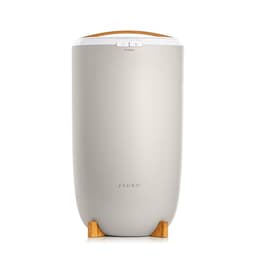
1. The bucket case
Zadro 20-Liter Towel Warmer Bucket
Zadro · TWB01 · best for a properly hot towel at a chosen moment
480 W into 20 liters for half an hour: the only format that makes a towel hot rather than warm.
The bucket is a short, intense cycle. Zadro publishes a “20-Liter large towel heater tub”, a 480 W maximum and a timer set to “15, 30, 45 or 60 minutes before automatically shutting off”.
Five times the power of a rail, concentrated on one or two towels in an insulated container, gets you something a rail cannot: heat you can feel immediately. About four cents a cycle.
Renter-Safe Install Rating
- Drilling
- None
- Tools
- None
- Time to fit
- None — it arrives assembled and plugs in
- Power
- Standard outlet
- Reversible on move-out
- Fully
Why: It is an appliance that sits on the floor and plugs into an outlet. There is nothing to fit, so there is nothing to undo.
Read from published documentation, not from fitting one. Zadro, Large Towel Warmer Bucket 20L (TWB). How the verdict is derived: renter-safe ratings explained.
What it costs to run — Electricity
- Rated power
- 480 W (Zadro’s published maximum)
- Cycle length
- 30 minutes — the middle of Zadro’s own timer settings
- Electricity rate
- 18.34 cents per kWh (US residential average, June 2026)
480 W x 0.5 h / 1000 x $0.1834 = $0.044
About 4 cents for a 30-minute cycle, or roughly $16 a year if you run one every day
Arithmetic on published specifications, not a measurement. Rate source: U.S. Energy Information Administration, Electric Power Monthly Table 5.6.A — US residential average 18.34 cents/kWh, June 2026.
What’s wrong with it
It only warms what is inside it, and the towel has to go somewhere afterwards. It does nothing about damp towels between showers.
What we can’t tell you
Zadro publishes no maximum temperature or heat-up time, so 'hot' remains undefined.
Published specifications
| Capacity | “20-Liter large towel heater tub” (5.3 gallons) |
|---|---|
| Maximum wattage | 480 W |
| Supply | 120 V AC, 60 Hz |
| Timer | “set timer to 15, 30, 45 or 60 minutes before automatically shutting off” |
| Dimensions | 21.25″ high, 12″ diameter |
| Weight | 8.5 lbs |
| Materials | “50% Plastic, 45% Metal, 5% Electronics” |
| Plug | “polarized B power plug for increased safety”, 83″ cord |
| Heat-up time | Not published |
| Maximum temperature | Not published |
#ad Price $169.99 as of October 19, 2026. Prices change; Amazon’s listing is the one that counts. How we’re funded.
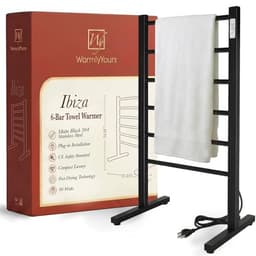
2. The rack case
WarmlyYours Ibiza Freestanding Towel Warmer
WarmlyYours · TWS5-IBZ06PP · best for towels that are dry when you reach for them
90 W spread across six bars all day: never hot, always dry, and it doubles as where the towels live.
A rail is a low, continuous heat. WarmlyYours publishes 90 W, 307 BTU/hr and six heated bars in 304 stainless, freestanding on a standard plug.
That is not enough to make a towel hot and it is plenty to keep several dry. In a bathroom without much ventilation, a towel that dries properly between uses is a bigger quality-of-life change than a hot one once a day — and it also stops the faintly sour smell damp towels develop.
About three cents a day on a two-hour timer.
Renter-Safe Install Rating
- Drilling
- None
- Tools
- None
- Time to fit
- Not published
- Power
- Standard outlet
- Reversible on move-out
- Fully
Why: WarmlyYours publishes this one as freestanding with a NEMA 5-15 plug: it stands on the floor, plugs into a normal outlet, and leaves with you.
Read from published documentation, not from fitting one. WarmlyYours, Ibiza Freestanding Towel Warmer (TWS5-IBZ06PP). How the verdict is derived: renter-safe ratings explained.
What it costs to run — Electricity
- Rated power
- 90 W (WarmlyYours’s published figure)
- Run time
- 2 hours a day on a plug-in timer
- Electricity rate
- 18.34 cents per kWh (US residential average, June 2026)
90 W x 2 h / 1000 x $0.1834 = $0.033 a day
About 3 cents a day, or roughly $12 a year on a two-hour daily timer
Arithmetic on published specifications, not a measurement. Rate source: U.S. Energy Information Administration, Electric Power Monthly Table 5.6.A — US residential average 18.34 cents/kWh, June 2026.
What’s wrong with it
It will never give you the hot-towel moment. If that is what you are picturing, a rail will disappoint you.
What we can’t tell you
No published warm-up time from WarmlyYours.
Published specifications
| Wattage | “90 W” |
|---|---|
| Supply | “120 V”, “0.75 A” |
| Heat output | “307 Btu” per hour |
| Bars | “6” heated bars |
| Dimensions | “34.84″ (885 mm) H x 21.85″ (555 mm) W x 13.97″ (355 mm) D” |
| Material | “304-stainless steel”, published in “Polished Stainless Steel” and “Matte Black” finishes |
| Cord and plug | “71″” cord, “NEMA 5-15 (Type B)” |
| Mounting | “Freestanding” — no wall mounting or drilling |
| Safety | “built-in TempSmart overheat protection” preventing surface temperatures above “149°F (65°C)” |
| Certification | “cULus Listed” |
| Warranty | “5-year limited warranty” |
Source: WarmlyYours, Ibiza Freestanding Towel Warmer (TWS5-IBZ06PP)
#ad Price $351.00 as of October 19, 2026. Prices change; Amazon’s listing is the one that counts. How we’re funded.
Where to buy
Everything recommended on this page, in one place. Each link is an Amazon Associates link — we earn a commission at no extra cost to you, and it never decides a pick.
- $169.99View on Amazon
Zadro 20-Liter Towel Warmer Bucket
Zadro · TWB01 · Renter verdict: Safe
- $351.00View on Amazon
WarmlyYours Ibiza Freestanding Towel Warmer
WarmlyYours · TWS5-IBZ06PP · Renter verdict: Safe
#ad Prices are not shown because we only publish figures we have verified on the day. How we’re funded.
Questions people actually ask
towel warmer bucket
An insulated tub with a heating element in the base, sized for one or two rolled towels and run on a timed cycle. Zadro publishes 20 liters, a 480 W maximum and timer settings of 15, 30, 45 or 60 minutes.
heated towel rack
A ladder of heated bars that keeps several towels warm and dry continuously at low wattage. WarmlyYours publishes 90 W for its six-bar freestanding model — enough to dry towels, not enough to heat a room.
what is a towel warmer
Any appliance that warms towels electrically. In practice it means one of three formats: a bucket that heats one or two towels hot on a timer, a rail that keeps several gently warm, or a cabinet, which is a commercial product.
Sources
Read next
Back to Warmers & Comfort.