Renter-friendly bathroom ventilation
You cannot fit a ducted fan in a rental. You can change how the room is used, and you can ask for the right fixture with the right numbers attached.
By Sawyer V. · · How we research
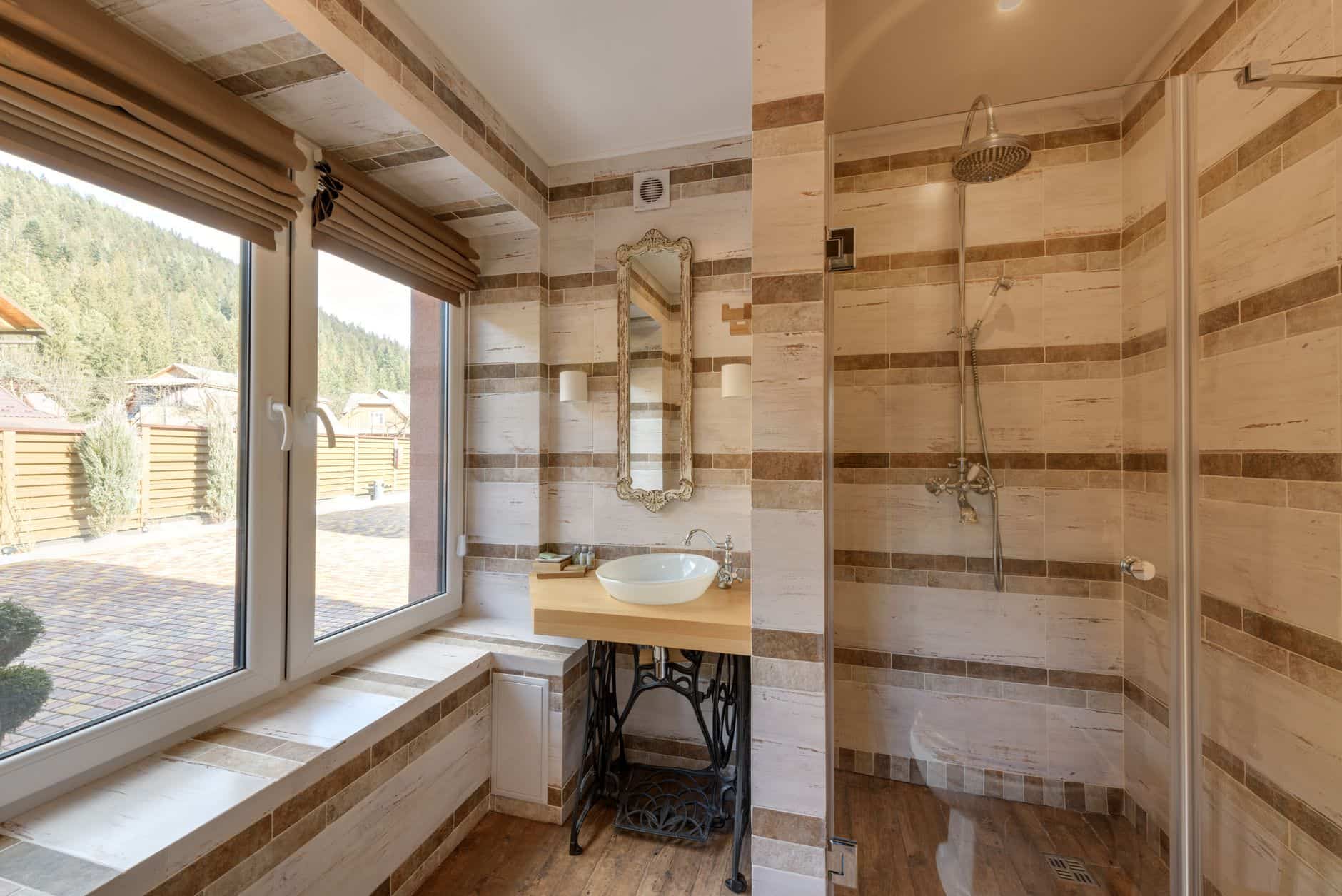
The short answer
We earn a commission if you buy through the links on this page, at no extra cost to you. It does not change which products we pick or what we say about them — here is exactly how that works.
Quick picks
Tap any row for the full write-up. Prices are checked against Amazon rather than remembered — where we have no verified figure the button says so.
| # | Product | Best for | Renter | Price |
|---|---|---|---|---|
| 1 |  WhisperSense DC Spot Ventilation Fan A humidity sensor adjustable from 30 to 80% RH and a delay timer from 30 seconds to 60 minutes. | A bathroom where nobody remembers the switch | Owner-only | |
| 2 | No photo yet WhisperCeiling DC Ventilation Fan 50, 80 or 110 CFM at below 0.3 sones on the lower speeds, and 4.0 to 16.4 watts. | Replacing a fan that is loud enough to avoid using | Owner-only |
What a tenant can do tonight
- Start the fan before the shower, not after. You are removing vapor as it is made rather than clearing a saturated room.
- Leave it running for 20 minutes afterwards. That is HVI’s recommendation: “HVI recommends that the fan be left on for 20 minutes after use of the bathroom.”
- Open the window if there is one. The EPA puts the fan and the window in the same sentence: “Run the bathroom fan or open the window when showering.”
- Leave the door open afterwards so the damp air has somewhere to go.
- Draw the shower liner flat and squeegee the glass, so the water that is left in the room is on a surface that dries.
None of that needs permission, and together it does more than any gadget a tenant can buy.
The number to aim at
The EPA publishes a target for the whole home: “Keep indoor humidity below 60 percent (ideally between 30 and 50 percent) relative humidity.” A cheap hygrometer tells you where your bathroom sits, and it turns an argument about damp into a number you can put in an email.
What we could not find a product for
People search for a plug-in bathroom fan, a window fan for a bathroom, or a ductless fan that needs no installer. We looked, and we are not going to rank one, because no maker we could reach publishes bathroom performance for these: no CFM rating for damp-room use, no moisture-removal figure, and no statement that the product is suitable for a bathroom.
A dehumidifier is the one movable appliance with a real published metric — ENERGY STAR says capacity is “usually measured in pints per 24 hours” and suggests 20 to 30 pints a day for a slightly-to-moderately damp small or medium space, with “Doors and windows to the space being dehumidified should be closed while the unit is running.” In a bathroom with the door shut and no supply of dry air, that is a slow tool for a fast problem. Fan against dehumidifier is compared in full here.
When the fan is broken, that is a repair
A fan that runs but does not clear the mirror, or one that does not run at all, is maintenance rather than an upgrade. Report it in writing, describe what happens (the mirror stays fogged, the ceiling paint is peeling, mildew keeps returning), and name the outcome you want.
If you are asking for a better fan rather than a repair, bring numbers: HVI’s sizing rule of “1 CFM per square foot” for bathrooms up to 100 sq ft, and 1.0 sones or less for quiet. Our sizing guide does the arithmetic for you, and how to frame the request is here.
What the damp is doing meanwhile
Moisture in a bathroom shows up on the softest things first: the liner, the towels, the grout. The EPA’s line on recurring mold is blunt — “increasing ventilation (running a fan or opening a window) and cleaning more frequently will usually prevent mold from recurring”.
So while you wait for the landlord: dry the towels properly, and replace or wash the liner.
Install ratings
Every exhaust fan on this site rates Owner-only on our install rating: they are hardwired and ducted. The renter-safe part of ventilation is behavior, plus the textiles you own.
Every pick in full
2 we would buy. Each carries its Renter-Safe Install Rating, the published specs behind it, and the honest gap in what we know.
1. What to ask a landlord for
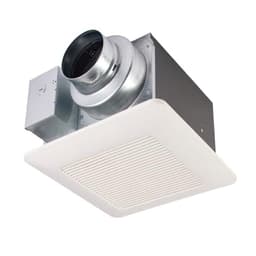
WhisperSense DC Spot Ventilation Fan
Panasonic · FV-0511VQC1 · best for a bathroom where nobody remembers the switch
A humidity sensor adjustable from 30 to 80% RH and a delay timer from 30 seconds to 60 minutes.
If your landlord is willing to replace a fan, this is the one to name. Panasonic’s WhisperSense DC publishes “Variable humidity control from 30-80% relative humidity” and an “Adjustable delay timer from 30 seconds to 60 minutes”.
That solves the problem tenants actually have with fans: the fan is fine, but nobody runs it long enough. A sensor and a timer run it for you, which also means the landlord is not relying on your habits to protect their plaster.
Renter-Safe Install Rating
- Drilling
- Required
- Tools
- Not published
- Time to fit
- Not published
- Power
- Hardwired
- Reversible on move-out
- No
Why: A hardwired ceiling fan on a duct run. The sensors change when it runs, not how it is installed.
Read from published documentation, not from fitting one. Panasonic — WhisperSense DC 50-80-110 CFM, published humidity range, sensors, sones and watts. How the verdict is derived: renter-safe ratings explained.
What’s wrong with it
It is hardwired on a duct run, so it is entirely the owner's call and the owner's electrician.
What we can’t tell you
Panasonic publishes no warranty on the product page.
Published specifications
| Airflow | “Pick-A-Flow®” selector — 50, 80 or 110 CFM |
|---|---|
| Noise | Below 0.3 sones at all three speeds at 0.1 in. static pressure; 0.4, 0.6 and 0.9 sones at 0.25 in. |
| Power draw | 4.0 to 16.4 watts depending on speed and static pressure |
| Humidity sensor | “Variable humidity control from 30-80% relative humidity” |
| Motion sensor | Included, with “Motion on/Motion off” and “Motion on/Humidity off” modes |
| Delay timer | “Adjustable delay timer from 30 seconds to 60 minutes” |
| Certification | “ENERGY STAR® certified”, awarded “2018 Most Efficient” |
| Duct | 4 in. or 6 in. |
| Grille and opening | 13 in. square grille; 10-1/2 in. square mounting opening |
| Warranty | Not published on the product page |
Source: Panasonic — WhisperSense DC 50-80-110 CFM, published humidity range, sensors, sones and watts
#ad Price $223.99 as of October 18, 2026. Prices change; Amazon’s listing is the one that counts. How we’re funded.
2. The quiet standard
WhisperCeiling DC Ventilation Fan
Panasonic · FV-0511VQ1 · best for replacing a fan that is loud enough to avoid using
50, 80 or 110 CFM at below 0.3 sones on the lower speeds, and 4.0 to 16.4 watts.
Panasonic’s WhisperCeiling DC is our top exhaust fan and the useful thing to point at when the existing fan is so loud that nobody turns it on. Panasonic publishes below 0.3 sones at 50 and 80 CFM, and 4.0 to 16.4 watts.
HVI’s own guidance is that “For quiet bathroom ventilation the fan should be rated at 1.0 sones or less” — a bar this fan clears three times over on its lower speeds.
Renter-Safe Install Rating
- Drilling
- Required
- Tools
- Not published
- Time to fit
- Not published
- Power
- Hardwired
- Reversible on move-out
- No
Why: A ceiling-mounted fan wired into a branch circuit and connected to a duct run. It is an electrical and structural alteration, not a fitting, and it is not available to a tenant.
Read from published documentation, not from fitting one. Panasonic — WhisperCeiling DC 50-80-110 CFM, published airflow, sones, watts and dimensions. How the verdict is derived: renter-safe ratings explained.
What’s wrong with it
Also hardwired and ducted: Owner-only, whichever fan gets chosen.
What we can’t tell you
No warranty published on the product page.
Published specifications
| Airflow | “Pick-A-Flow” speed selector — “50, 80, 110 CFM” |
|---|---|
| Noise | Below 0.3 sones at 50 and 80 CFM, and 0.9 sones at 110 CFM (0.1 in. static pressure) |
| Power draw | “4.0 to 16.4 Watts” depending on speed and static pressure |
| Certification | “ENERGY STAR® Certified”, recognized as “2021 Most Efficient” |
| Duct | Dual duct adapter for 4 in. or 6 in. |
| Grille | 13 in. square |
| Mounting opening | 10-1/2 in. square |
| Weight | 11.0 lbs gross |
| Motor | DC motor with ECM and SmartFlow |
| Bracket | “Single-hinged Flex-Z-Fast® bracket” |
| Warranty | Not published on the product page |
Source: Panasonic — WhisperCeiling DC 50-80-110 CFM, published airflow, sones, watts and dimensions
#ad We have no verified live price for this one right now, so we are not showing a number. How we’re funded.
Where to buy
Everything recommended on this page, in one place. Each link is an Amazon Associates link — we earn a commission at no extra cost to you, and it never decides a pick.
- $223.99View on Amazon
WhisperSense DC Spot Ventilation Fan
Panasonic · FV-0511VQC1 · Renter verdict: Owner-only
- Check price on Amazon
WhisperCeiling DC Ventilation Fan
Panasonic · FV-0511VQ1 · Renter verdict: Owner-only
#ad Prices are not shown because we only publish figures we have verified on the day. How we’re funded.
Questions people actually ask
how can renters ventilate a bathroom with no fan
Open the window while you shower and afterwards, leave the door open, and dry surfaces down. The EPA's own guidance pairs them: run the bathroom fan or open the window when showering.
is there a plug-in bathroom exhaust fan
We could not find one whose maker publishes bathroom performance — no CFM for damp-room use, no moisture figure and no statement of suitability for a bathroom — so we do not recommend any.
how long should you run a bathroom fan after a shower
HVI recommends leaving the fan on for 20 minutes after use of the bathroom.
what humidity should a bathroom be
The EPA advises keeping indoor humidity below 60 percent, ideally between 30 and 50 percent relative humidity.
Sources
- US EPA — A Brief Guide to Mold, Moisture and Your Home
- Home Ventilating Institute — Bathroom ventilation guidance (1 CFM per sq ft, 20 minutes after use)
- Home Ventilating Institute — Bathroom exhaust fans (1.0 sones or less for quiet)
- ENERGY STAR — Dehumidifiers: capacity, sizing and operation
- Panasonic — WhisperSense DC FV-0511VQC1 published humidity range and delay timer
Read next
Back to Renter-Safe Upgrades.